
In this article, you will briefly dive into Natural Language Processing. You will learn what Natural Language Processing (NLP) is and how it relates to Artificial Intelligence (AI). You will also learn the significant tasks in Natural Language Processing.
Nearly two years ago, I started my journey into the Natural Language Processing (NLP) world as a PhD student. In my research, I focus on the detection of disinformation and the identification of persuasion techniques. These subjects are fascinating from a research perspective but also crucial in our digital world, where disinformation and propaganda spread rapidly and influence public discourse. I like to share my knowledge, and I would like to make NLP more accessible to everyone. As a result, I decided to write my first article about NLP, and I would like to briefly present what is hidden under Natural Language Processing. To structure my writing adventure, I will mostly follow the fast.ai course: “A Code-First Introduction to Natural Language Processing.” I plan to write more articles on topics covered in the course, following the themes of its lessons.
What is NLP?
Let’s start with definition
Natural Language Processing is a fascinating interdisciplinary subfield of computer science and artificial intelligence. NLP is closely related to other areas, one of which is a branch of linguistics called computational linguistics. NLP’s primary goal is to give computers and digital devices the ability to process and work with natural language.
Natural language processing (NLP) is a subfield of computer science and artificial intelligence (AI) that uses machine learning to enable computers to understand and communicate with human language.
IBM
Natural Language Processing Tasks and Applications
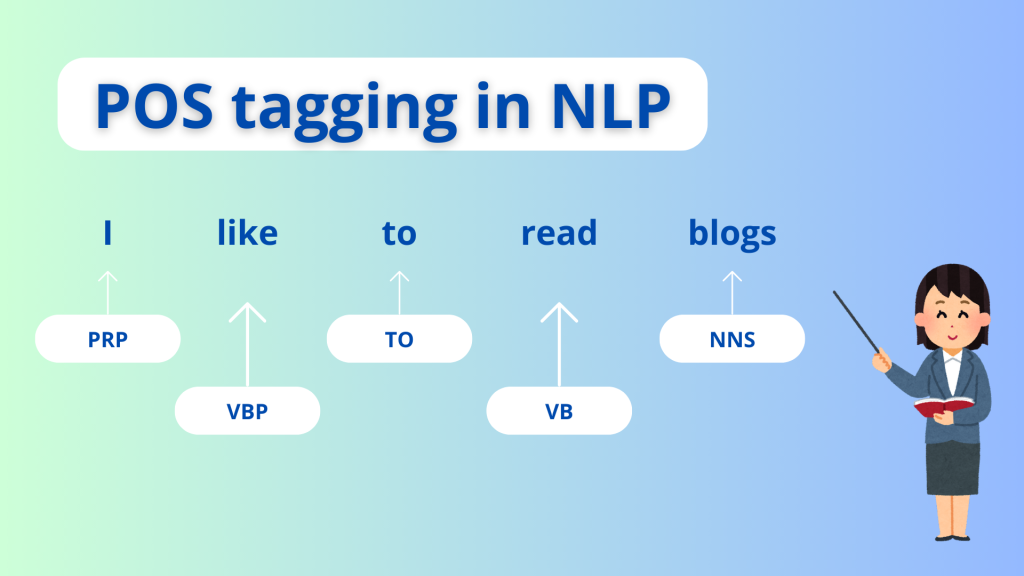
NLP is an interdisciplinary and broad field that encompasses a wide range of tasks. Here are some of the key tasks in Natural Language Processing:
- Part-of-Speech Tagging (POS tagging): Marking a word in a text (corpus) as corresponding to a particular part of speech, based on both its definition and its context, e.g. identify if word is a noun, verb, adjective, etc.
- Text Classification: Assigning categories/classes to text. Examples include spam detection (e.g. spam or no spam), sentiment analysis (e.g. positive, neutral, negative)
- Named Entity Recognition (NER): Identifying person names, organizations, locations, medical etc. For example, identifying “Warsaw” as a location or “Allegro Sp. z o.o.” as an organization.
- Question Answering: Developing systems that can automatically answer questions posed in natural language.
- Speech Recognition: Identifying words spoken out loud and converting into readable text.
- Text-to-Speech: Converting text into natural-sounding speech.
- Machine Translation: Translating text from one language to another.
- Language Modeling: Predicting the next word in a sentence or sequence of words based on the context and previous words.
- Topic Modelling: discovering the abstract “topics” that occur in a collection of documents.
- Text Summarization: Creating automatically a shorter version of a text while preserving its main ideas.
NLP powers a wide range of applications we encounter daily, transforming how we interact with technology. NLP has become integral to numerous tools and services that enhance our everyday lives. Moreover, tools that use the power of NLP techniques help many people in their work. These tools also helped me in writing this text. I’m not a native English speaker, so to be safe when writing an article, I sometimes use DeepL.com, which allows me to translate words/sentences from Polish to English. After writing this article, I pasted it into Grammarly.com to ensure I did everything correctly and to correct my text. I program in Python almost every day, and more and more often, instead of checking on StackOverflow why my code doesn’t work, I write queries to ChatGPT.
NLP is Changing a Lot
Natural Language Processing is rapidly transforming, mainly driven by artificial intelligence and machine learning advances. These changes are expanding the capabilities of NLP and enhancing its impact across various domains. But was NLP always centered around advanced Large Language Models like ChatGPT from OpenAI? Not at all.
Historically, NLP used to rely on hard-coded rules to understand and process language. However, in the 1990s, there was a shift towards using statistical methods and classical machine learning. These new approaches often struggled with the complexity and nuances of natural language, so they weren’t always the best.
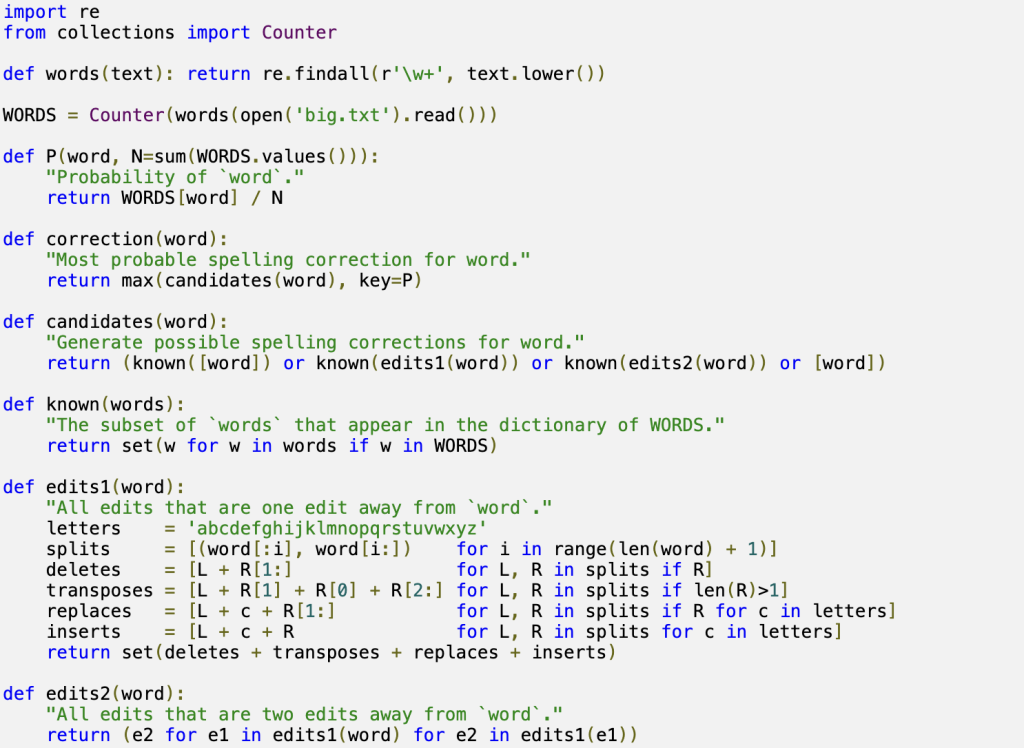
Source: How to Write a Spelling Corrector
Over the past years, NLP has undergone a significant transformation with the adoption of deep neural networks. The transformer architecture of deep neural networks presented in scientific paper “Attention is All you Need” by Vaswani et all. is at the heart of this success. Transformer has become the foundation for modern NLP. Modern Language Models enable significant advancements in understanding and generating human language, as seen in GPT-4 and BERT models. This shift has significantly improved how machines process and generate human language, driving advancements in applications such as chatbots, voice assistants, automated translation, and many more.
The progress in NLP is excellent, and sometimes it is hard to believe what’s happening. Many researchers worldwide are now working on it, and it’s constantly changing. I’m excited to be part of this field and can’t wait to see what comes next. The future of NLP is inspiring, and I’m eager to see where it will go.
References
- What is NLP? Article by IBM
- new fast.ai course: A Code-First Introduction to Natural Language Processing; Link
- Language Modeling
- NLP-Abstract Topic Modeling. Article by Gaurika Tyagi.
- How to Write a Spelling Corrector by Peter Norvig
- Featured image: Photo by Sven Brandsma on Unsplash